Rhago: A Font with a Singular Artistic Voice
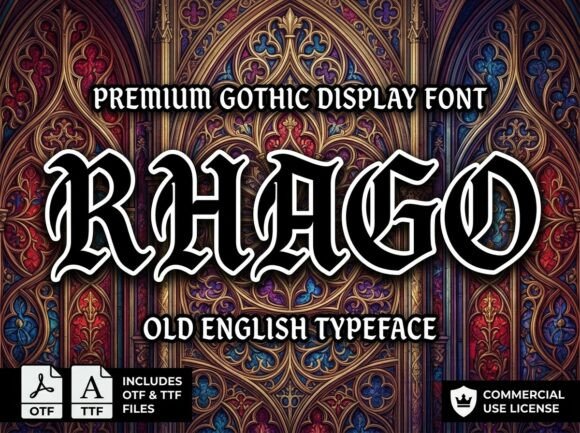
Every designer knows the feeling: you're deep into a project, and the standard fonts just aren't cutting it. The headline lacks punch, the logo feels generic, the packaging needs a jolt of personality. This is where a typeface like Rhago steps in. It’s not just another set of letters; it’s a deliberate creative choice designed to be the visual centerpiece of your work. Rhago is a decorative display font built for moments when ordinary won’t do. Its character is distinct—each letterform carries a strong, artistic presence, making it ideal for creators aiming to establish a memorable and high-end aesthetic.
The Anatomy of Distinction: What Makes Rhago Tick
Visually, Rhago is an all-caps typeface, and that’s by design, not a limitation. The absence of lowercase letters is a core feature, creating a uniform, powerful rhythm across headlines, logos, and decorative initials. This characteristic makes it a focused tool; it’s engineered for impact in short, commanding bursts of text. The letterforms themselves likely feature unique sculptural details, subtle weight variations, or unexpected curves that give it a bespoke, crafted feel. Think of it as the typographic equivalent of a custom-designed chair—it’s functional, but its primary purpose is to make a statement.
This isn't a sans serif font for body copy or a script font for wedding invitations. Rhago occupies a specific niche as a premium font for branding and editorial moments. Its personality leans toward the modern yet artistic, bridging the gap between contemporary minimalism and expressive design. It can convey sophistication, creativity, and a confident brand identity without saying a word. The font pairing possibilities are key to its versatility. While Rhago commands attention, it needs a complementary partner—perhaps a clean sans serif font for subheadings or a simple serif font for body text—to create a balanced and readable layout.
Strategic Applications: Where Rhago Shines
Understanding where to deploy Rhago is about recognizing its strengths. It excels in roles that require immediate visual recognition and emotional resonance. In logo design, it can become the foundational element of a brand’s visual identity, especially for boutique businesses, creative agencies, artisanal product lines, or luxury services. The all-caps structure lends itself to a stable, authoritative mark.
For packaging design, Rhago can transform a product on the shelf. Imagine it on a coffee bag, a skincare label, or a specialty food item—the font itself communicates quality and care before the customer even reads the description. In editorial design, such as magazine covers, book titles, or feature article headlines, it provides a striking entry point that draws the reader in. Its application extends powerfully into the digital realm as well. Think of hero sections on websites, impactful social media graphics, or YouTube thumbnails where a bold, artistic header is non-negotiable.
Practical Guidance for the Creative Professional
Choosing a creative font like Rhago requires a bit of strategy. First, evaluate the project’s tone. Does the brand or message need to feel artistic, elevated, and distinctive? If the goal is purely utilitarian communication, Rhago might be overkill. But if the brief calls for personality and impact, it’s a strong candidate.
Next, consider readability considerations. As an all-caps display face, Rhago is not meant for long paragraphs or small sizes on screens. Its purpose is to be seen and absorbed quickly. Always test it in context: mock up a headline, a logo, or a packaging layout. How does it interact with your chosen imagery and color palette? Does it maintain clarity at the intended size?
When it comes to font pairing, simplicity is your ally. Since Rhago has such a strong character, pair it with a neutral, highly readable typeface. A geometric sans serif font for supporting text often works beautifully, letting Rhago do the heavy lifting for titles and key phrases. The included files—an OTF file for advanced software and a TTF file for broad compatibility—ensure it integrates smoothly into your workflow, whether you’re in Adobe Illustrator, Canva, or any other design platform.
Finally, always review the commercial licensing terms that accompany the font to ensure your intended use—whether for a client’s brand, a sold product, or a personal blog—is fully covered. A premium font is a valuable design asset, and using it correctly protects both you and the font creator’s work. Rhago is a tool for specific jobs. Used thoughtfully, it doesn’t just set text; it elevates the entire brand identity and makes a creative project unforgettable.